David Monnerat

Product + AI | Systems Thinker | Enterprise Reality

Category: leadership

  • The Question Is the Creativity

    The Question Is the Creativity

    The conversation around AI tends to focus on outputs. This post is about something upstream from that.

    I was in a room with a small group of engineers and product people. We had a standing rule for these sessions: no constraints. Not on money, not on time, not on what the law currently allowed. Laws change, and if we only invented inside existing rules we’d never get ahead of them. The goal was to ask questions nobody had thought to ask yet.

    One of those sessions started with a conversation between me and a colleague. His father had Parkinson’s. My son had ataxia, a neurological condition affecting coordination and balance that causes involuntary movement. We were talking about tremors, how they made it hard for devices to understand intentional gestures, how the technology kept misreading the signal. Somewhere in that conversation someone said: what if we thought about this the way noise-cancelling headphones work? Not filtering out the gesture, but filtering out the tremor. Separating the signal from the noise at the body level.

    That question became a patent.

    The patent room is an extreme version of something that happens every day in less formal settings. The standard for a patent is legal novelty, something that hasn’t existed before in that form. But the same upstream act, two experiences colliding into a question worth asking, happens whenever someone brings their specific life to a problem and asks it differently than anyone else would have. The question doesn’t have to be patentable to matter. It just has to come from somewhere a model can’t go.

    I’ve thought about that moment a lot since AI became the dominant conversation in technology. Because that question could not have come from a model. Not because the model isn’t capable of sophisticated reasoning. It is. But because the question didn’t come from reasoning. It came from two people’s lives colliding in an unconstrained space.

    That’s where creativity actually lives. Not in the execution. In the question.


    What the Room Was Actually Doing

    Those sessions had a specific energy. You removed the practical objections that normally narrow thinking before it has a chance to go anywhere interesting. No one said “that’s too expensive” or “we can’t do that yet.” You created space for people to bring their actual experience, not their professional expertise, but their lives. Their parents. Their kids. Their frustrations. Their observations from places that had nothing to do with the problem on the table.

    And then you let those things collide.

    We did a session focused on aging in place, how to help elderly people live independently longer, especially when their families were far away. Every person in that room had a version of that worry. A parent in another state. A grandparent who had fallen. The anxiety of not knowing. The ideas that came out of that session didn’t come from market research or competitive analysis. They came from people who were living the problem and had been given permission to imagine solutions without limits.

    That combination of unconstrained thinking plus personal stakes is what produces the questions worth asking. Remove the constraints and you get speculation. Add the personal stakes and you get invention.

    The cochlear implant came from a researcher whose child was deaf. He wasn’t analyzing the hearing aid market. He was watching his daughter navigate a world that hadn’t been designed for her and asking whether it had to be that way. The sticky note came from a choir singer who had been frustrated by a bookmark falling out of his hymnal for years before he connected that frustration to an adhesive a colleague had invented that nobody wanted. Neither of those connections was the product of a logical process. They were the product of a life that had been paying attention to a problem long enough to recognize an answer when it appeared from an unexpected direction.

    Personal stakes aren’t the only path to the right question. Plenty of inventors have no direct connection to the problem they’re solving. But stakes create a kind of attention that’s hard to replicate any other way. You notice differently when you care.

    The question came first. The execution came after.


    What AI Actually Does

    AI is extraordinarily good at execution. Given a well-formed question, it can explore the solution space faster and more thoroughly than any human team. It can find patterns across domains that no individual would have the bandwidth to survey. It can synthesize, generate, iterate, and refine at a scale that would have seemed impossible five years ago.

    I use it this way every day. And the back-and-forth of working with a model, the “that’s close but not quite it,” the steering toward something you can sense but not yet fully articulate, has its own creative quality. It reminds me of those patent sessions. The iterative energy of a room where ideas are being shaped in real time, where one person’s response moves another person’s thinking, where the answer emerges through the conversation rather than arriving fully formed.

    But there’s a difference. In that room, every person brought something the others didn’t have. Their specific experience, their specific frustration, their specific version of the problem. The model brings what it was trained on. Which is vast, more than any person in any room could hold, but it is still bounded by what humans have already thought, written, and recorded. It can recombine brilliantly. It cannot bring something from outside its training the way a person brings something from outside their expertise.


    The Constraint That Isn’t a Constraint

    We told those rooms: imagine no constraints. And it worked, because removing the practical filters let thinking go somewhere it couldn’t go otherwise.

    But you could give an AI the same instruction. “Imagine no constraints on money, time, or law. Solve this problem.” And it would produce output. Sophisticated output. Options and combinations and lateral connections across domains it has been trained on. It might even produce something that looks creative.

    What it can’t do is bring something from outside its training into that unconstrained space. The model has no constraints to remove because it has no constraints in the first place, and also no life experience pressing against those constraints, no accumulated frustration waiting for permission to become a question. The removal of constraints only matters if something was being constrained. In a human, what gets constrained is everything they’ve lived and observed and felt and noticed. Remove the filter and that floods in.

    The model has no equivalent. It can go wide within what it knows. It cannot go to the place where my colleague’s father’s tremor and my son’s tremor became the same problem.


    The Most Important Skill

    There’s a version of the AI conversation that focuses on prompting. How to write better prompts. How to get better output. How to work with the tools more effectively. That’s useful, and I’m not dismissing it.

    But I think it understates where the leverage actually is.

    The prompt is downstream of the question. And the question is downstream of the specific collision: your son’s tremor meeting your colleague’s father’s tremor, a choir singer’s bookmark meeting a chemist’s unwanted adhesive, a researcher’s deaf daughter meeting a question about whether the world had to be that way. That’s not experience in the abstract. It’s experience that has been building pressure against a specific problem long enough to recognize an answer when it comes from an unexpected direction.

    That capacity lives in you, not in the tools.


    What the Model Will Never Have

    The model has no son with ataxia. It has no colleague’s father with Parkinson’s. It has no parent far away whose silence worries it. It has no memory of a room where someone said “what if we” and everything shifted. It has no frustration that has been accumulating for years, waiting for the right collision.

    It has no stakes. It notices nothing differently because it cares about nothing. It brings no life to the question because it has no life to bring.

    Those aren’t limitations that will be engineered away. They’re not gaps in the training data or constraints on the context window. They’re the definition of what the tool is.

    And they’re the definition of what you are.

    The question comes from you. The creativity is yours. The execution, extraordinary, useful, genuinely remarkable, is something you can share.

    Don’t confuse the two.

  • The Same Rocket, A Different Ship

    The Same Rocket, A Different Ship

    AI investment is accelerating faster than any technology wave before it. The pattern underneath it is older than most of us realize.

    There is something deeply human about looking up.

    We’ve always done it. We looked at the stars and decided we belonged there. We looked at the horizon and built ships to cross it. We looked at problems that seemed impossible and found ways to make them less so. That instinct, the refusal to accept limits as permanent, is responsible for most of what we’ve built.

    It’s also responsible for a pattern that keeps repeating. And we never seem to learn it.

    Every generation gets a technology that feels like the one. The thing that will finally close the gap between what we can do and what we’ve always wanted to do. Computers. Then software. Then the internet. Then big data. Each one arrived with genuine capability and genuine promise. Each one attracted enormous investment. Each one produced real gains, new industries, new efficiencies, new possibilities that didn’t exist before. And each one, eventually, ran into the distance between what the demo promised and what the real world required.

    That gap never closed the way we expected. So we did what we always do.

    We threw more fuel at it.

    (more…)
  • Defining Success Criteria: Do You Know Where You Are Going?

    Defining Success Criteria: Do You Know Where You Are Going?

    It was the tenth call.

    I had been on the first one. A customer data project, matching records across systems to connect outcomes to the right source. It seemed straightforward enough that I handed it off and moved on. What followed was eight more calls between my team and the customer, each one ending with a tweak to the logic, each tweak fixing something and revealing something else.

    The problem wasn’t the code. It wasn’t the team. It was that nobody had defined success criteria before the work started. Nobody had asked: what does done actually look like?

    By the time my team pulled me back in, it was already swirling. The customer’s manager had joined too. I suspect that because the issue still wasn’t resolved, he felt the need to get involved. We had a piece of logic built by people who were no longer on the team, results that were almost always right, and a team that had been grinding on this for weeks.

    I asked a simple question: What do you actually want?

    That was it. Every previous conversation had been about what the code wasn’t doing right, assuming the approach was sound and just needed adjustment. Nobody had stopped to ask whether the approach itself was the right one. The answer to that simpler question was: when this happens, here is what we expect to see. And the solution that followed was far simpler than what we had been building toward. A defined set of conditions, clearly mapped to outcomes. The complexity we had been wrestling with wasn’t a feature of the problem. It was a feature of never having properly defined the problem.

    We left that meeting with a clear destination. We should have had that conversation on call one.

    (more…)
  • The White Whale

    The White Whale

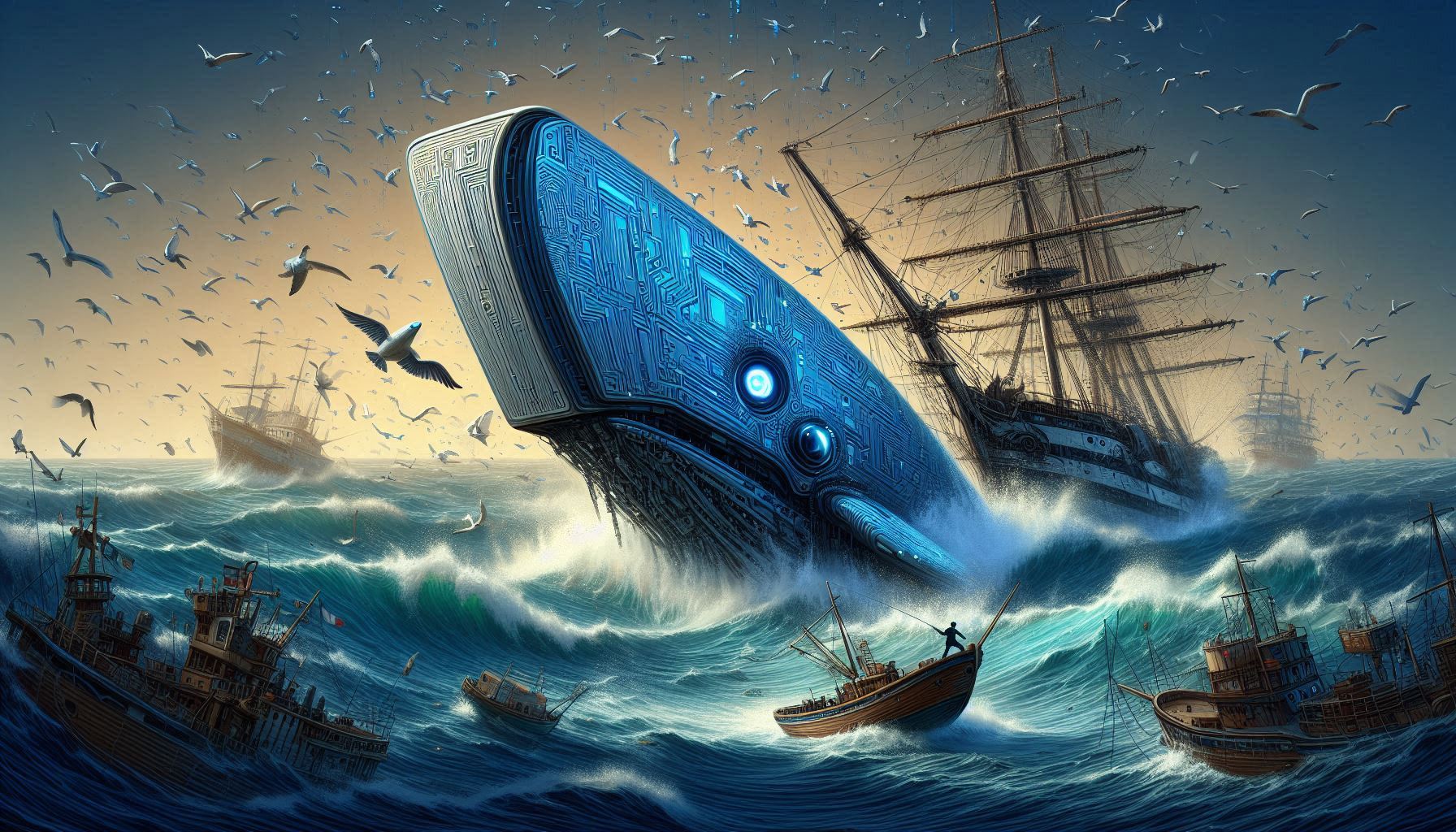
    In Moby-Dick, Captain Ahab’s relentless pursuit of the white whale isn’t just a quest for revenge; it’s a cautionary tale about obsession. Ahab becomes so consumed by his singular goal that he ignores the needs of his crew, the dangers of the voyage, and the possibility that his mission might be misguided.

    This mirrors a common trap in problem-solving: becoming so fixated on a single solution—or even the idea of being the one to solve a problem—that we lose sight of the bigger picture. Instead of starting with a problem and exploring the best ways to address it, we often cling to a solution we’re attached to, even if it’s not the right fit or takes us away from solving the actual problem.

    A Cautionary Tale

    Call me Ishmael.1 – Herman Melville

    I once worked on a project to identify potential customer issues. The business provided the context and success metrics, and we were part of the team set out to solve the problem.

    After we started, an executive on the project who knew the domain had a specific vision for how the solution should work and directed us on exactly what approach to use and how to implement it. While their approach seemed logical to them, it disregarded key best practices and alternative solutions that could have been more effective.

    We ran experiments to test both the executive’s approach and an alternative, using data to demonstrate how a different approach produced better results and would improve business outcomes.

    But the executive was undeterred. They shifted resources and dedicated teams to their solution, intent on making it work. We continued a separate effort in parallel but without the resources or backing of the received by the other team.

    The Crew

    Like the crew of the Pequod, the teams working on the executive’s solution were initially excited about the attention and resources. They came up with branding and a concept that made for good presentations. The initial few months were spent creating an architecture and building data pipelines under the presumption that the solution would work. Each update gave a sense of progress and success as items were crossed off the checklist.

    That success, though, was based on output, not outcomes. Along the way, the business results weren’t there, and team members began to question the approach. However, even with these questions and the evidence that our approach was improving business outcomes, the hierarchical nature of the commands kept the crew from changing course.

    The Prophet

    In Moby Dick, Captain Ahab smuggles Fedallah, an almost supernatural harpooner, onto the ship as part of a hidden crew. Fedallah is a mysterious figure who serves as Ahab’s personal prophet, foretelling Ahab’s fate.

    Looking for a prophet of their own, our executive brought in a consulting firm to see if they could get the project on track. The firm’s recommendations largely mirrored those of our team. However, similar to Fedallah’s prophecies, the recommendations were misinterpreted. What we saw as clear signals to change course, the executive saw as a chance of success and doubled down on their solution.

    The Alternate Mission

    Near the end of the novel, the captain of another vessel, the Rachel, pleads with Ahab to help him find his missing son, lost at sea. Ahab refuses because he is too consumed by his revenge. Ultimately, the obsession costs Ahab his life as well as those of his crew, with the exception of Ishmael, who was, ironically, rescued by the Rachel, the whaling ship that had earlier begged Ahab for help.

    We tried to bridge the gap between the two efforts for years, but the executive’s fixation on their solution made collaboration impossible. We made a strong case using data to change the mission from making their solution work to refocusing on the business goals and outcomes. Unfortunately, after many attempts, we weren’t able to convince them or affect their bias and feelings that their solution should work. Too many claims had already been made, and too much had been invested to change course. The success of their solution was the only acceptable end of the journey, with that success always being just over the horizon.

    A Generative White Whale

    I’ve been thinking about this story lately because I see the same pattern happening with generative AI. Just as Captain Ahab chases Moby Dick, many companies chase technological solutions without fully understanding if those solutions will solve their real business problems.

    Since ChatGPT was launched to the public in 2022, there has been pressure across industries to deliver on generative AI use cases. The impressive speed at which users signed up and the ease at which ChatGPT could respond to questions gave the appearance of an easy implementation path.

    Globally, roadmaps were blown up and rebuilt with generative AI initiatives. Traditional intent classification and dialog flows were replaced with large language models in conversational AI and customer support projects. Retrieval-augmented generation changed search and summarization use cases.

    Then, the world tried to use it. Everyone quickly learned that the models didn’t work out of the box and underestimated the amount of human oversight and iteration needed to get reliable, trustworthy results.2 We learned that their data wasn’t ready to be consumed by these models and underestimated the effort required to clean, label, and structure the data for generative AI use cases. We learned about hallucinations, toxic and dangerous language in responses, and the need for guardrails.

    But the ship had sailed. The course had been set. Roadmaps represent unchangeable commitments3. The mission to hunt for generative AI success continued.

    What started with use cases with clear business outcomes inherited from the pre-generative AI days started to change. Rather than targeting problems that could significantly impact business goals, the focus shifted to finding problems that could be solved with generative AI. Companies had already invested too much time, money, and opportunity cost, and they needed to deliver something of value to justify the voyage.4,5

    It became an obsession.

    A white whale.

    Chasing the Right Whale

    I try all things, I achieve what I can.6 – Herman Melville

    That’s not to say there isn’t a place for generative AI or other technology as possible solutions. I’ve been working with AI for almost a decade and have seen how it can be truly powerful and transformative when applied to the right use case that aligns with business outcomes and solving customer or business problems.

    Experimenting with the technology can foster innovation and uncover new opportunities. However, when the organization shifts focus away from solving its most critical business problems and towards delivering a solution or leveraging a specific technology for the sake of the solution or the technology, misalignment between those two paths and choosing the wrong goal can put the entire mission at risk. The mission should always be the success of the business, not the technology.

    That’s the difference between chasing the white whale and chasing the right whale.

    Assess Your Mission

    The longer a project goes on, the more likely it will veer off course. Little choices over time make small adjustments to direction that can eventually lead to being far away from the intended destination. The same thing can happen with the overall mission. Ahab started his journey hunting whales for resources and, while he was still technically hunting a whale, his mission changed to revenge. If he took the time to reassess his position and motivation, Moby Dick would have had a less dramatic ending.

    As product and delivery teams, it’s healthy practice to occasionally look up and evaluate the current position and trajectory. While there may be an argument for intuition in the beginning, as more information becomes available, it’s important to leverage data and critical thinking rather than intuition and feelings which are more prone to bias.

    These steps can help guide that process.

    1. Reaffirm Business and Customer Priorities.

    Align leadership around the most critical problems. Start by revisiting the company’s core objectives and defining success. Then, identify the biggest challenges facing the business and customers before considering solutions.

    2. Audit and Categorize Existing Projects

    Identify low-impact or misaligned projects. List all ongoing and planned AI initiatives, categorizing them based on:

    • Business impact (Does it solve a top-priority problem?)
    • Customer impact (Does it improve user experience or outcomes?)
    • Strategic alignment (Is it aligned with company goals, or is it just chasing trends?)

    An important factor here is articulating and measuring how the initiative impacts business and customer goals rather than relates to a business or customer goal.

    For example, a common chatbot goal is to reduce support costs (business goal) by answering customer questions (customer goal) without the need to interact with a support agent. A project that uses generative AI to create more natural responses might look like it’s addressing a need, but it assumes that a more conversational style will increase adoption or improve outcomes. However, making responses more conversational doesn’t necessarily make them more helpful. If the chatbot still struggles with accurate issue resolution, customers will escalate to an agent anyway.

    3. Assess Generative AI’s Fit

    Ensure generative AI is a means to an end, not the goal itself.

    Paraphrasing one of my mantras I would use when a team approached me with an “AI problem” to solve:

    There are no (generative) AI problems. There are business and customer problems for which (generative) AI may be a possible solution.

    For each project, ask: Would this problem still be worth solving without generative AI?

    If a generative AI project has a low impact, determine if there’s a higher-priority problem where AI (or another solution) could create more value.

    4. Adjust the Roadmap with a Zero-Based Approach

    Rather than tweaking the existing roadmap, start from scratch by prioritizing projects based on impact, urgency, and feasibility.

    Reallocate resources from lower-value AI projects to initiatives that directly improve business and customer outcomes.

    5. Set Success Metrics and Kill Switches

    Define clear, measurable success criteria for every project. Establish a review cadence (e.g., every quarter) to assess whether projects deliver value. If a project fails to meet impact goals, have a predefined exit strategy to stop work and shift resources.

    This structured approach ensures that AI projects are evaluated critically, business needs drive technology decisions, and resources are focused on solving the most important problems—not just following trends.

    Conclusion

    The lesson of Moby-Dick is not just about obsession—it’s about losing sight of the true mission. Ahab’s relentless pursuit led to destruction because he refused to reassess his course, acknowledge new information, or accept that his goal was misguided. In business and technology, the same risk exists when companies prioritize solutions over problems and fixate on a specific technology rather than its actual impact.

    Generative AI holds incredible potential, but only when applied intentionally and strategically. The key is to stay grounded in business priorities, customer needs, and measurable outcomes—not just the pursuit of AI for AI’s sake. By regularly evaluating projects, questioning assumptions, and ensuring alignment with meaningful goals, teams can avoid chasing white whales and steer toward solutions that drive success.

    The difference between success and failure isn’t whether we chase a whale—it’s whether we’re chasing the right one.

    And I only am escaped alone to tell thee.7 – Herman Melville
    1. “Call me Ishmael.” This is one of the most famous opening lines in literature. It sets the tone for Ishmael’s role as the narrator and frames the novel as a personal account rather than just an epic sea tale. ↩︎
    2. https://www.cio.com/article/3608157/top-8-failings-in-delivering-value-with-generative-ai-and-how-to-overcome-them.html ↩︎
    3. Roadmaps are meant to be flexible and adjusted as priorities and opportunities change. ↩︎
    4. https://www.journalofaccountancy.com/issues/2025/feb/generative-ais-toughest-question-whats-it-worth.html ↩︎
    5. https://www.gartner.com/en/newsroom/press-releases/2024-07-29-gartner-predicts-30-percent-of-generative-ai-projects-will-be-abandoned-after-proof-of-concept-by-end-of-2025 ↩︎
    6. This quote from Ishmael reflects a spirit of perseverance and pragmatism, emphasizing the importance of effort and adaptability in the face of challenges. ↩︎
    7. The closing line of the novel echoes the biblical story of Job, in which a lone survivor brings news of disaster, underscoring the novel’s themes of fate, obsession, and destruction. ↩︎
  • In Defense of One-on-Ones

    In Defense of One-on-Ones

    Earlier this week, a former colleague forwarded me a video of Airbnb CEO Brian Chesky in an interview with Fortune saying he doesn’t believe in one-on-one meetings.

    The full context might reveal nuances specific to certain managerial levels. For example, he could have been referring to CEOs having one-on-ones with the rest of the C-suite who report to them. However, most of his references were to “employees,” and most of the comments on the video seem to generalize across all one-on-ones. Based on the video and related commentary, there appears to be growing skepticism about the value of one-on-ones.

    I’ve worked for bosses who didn’t see the value in one-on-ones, and I’ve worked for bosses who would use them to drive their agenda. When managers ignore or misuse one-on-ones, employees feel undervalued, disconnected, and unsupported.

    I’ve also been fortunate to work for bosses who modeled what a one-on-one should be. When managers prioritize regular one-on-ones, employees feel heard, supported, and valued. This fosters trust, alignment, and engagement, benefiting both the employee and the organization.

    Based on my experience, getting rid of one-on-ones is a terrible idea. (However, I favor getting rid of bad one-on-ones.)

    A few comments from the video highlighted misconceptions about one-on-ones or are signals of a bad one-on-one.

    “The employee owns the agenda. And what happens is they often don’t talk about the things you want to talk about.”

    One-on-ones are more than just about the agenda — they’re about building trust, understanding what motivates your team, and catching minor issues before they become big problems. Even if the employee’s agenda doesn’t directly overlap with your immediate goals, it gives you insight into what they’re thinking and feeling, which can help you guide them more effectively.

    That said, there are ways to make the meeting productive for both sides. The beauty of one-on-ones is that they’re a two-way conversation. While employees should have space to bring up what’s important to them, the manager also has an opportunity to steer the conversation toward topics they find valuable. It doesn’t have to be one or the other — it can be a balance.

    One way to address this is by co-creating the agenda. Before each meeting, you could ask the employee to suggest a couple of items they want to discuss, and you can add one or two topics that align with what you want to address. That way, both sides feel heard, and the meeting stays focused.

    In the spirit of the statement in the video, resist the temptation to control the full agenda. Remember, the one-on-one should be about the employee…not everything needs to be about you.

    “You become their therapist” and “They’re bringing you problems but often times they’re bringing you problems that you want other people in the room to hear. In other words, there’s very few times an employee should come to you one-on-one without other people.”

    One aspect of this comment I agree with is that some conversations are more appropriate in a team setting. Employees sometimes talk about their work or the project status they should bring up with the full team, such as surfacing a new issue. The nod to Jensen Huang’s quote, “I don’t do one-on-ones because I want everyone to be part of the solution and get the wisdom” is appropriate.

    But often, employees bring these topics up because they think that’s what their manager wants to hear. After all, that’s the only thing their manager asks about in one-on-ones.

    Sometimes, an employee, especially a junior one, doesn’t know how to bring a difficult topic up to the team. As a leader, those present opportunities to coach them and help shape how to bring those items to the team in a way that supports your organization’s culture.

    Finally, if an employee is bringing you items that are genuinely more appropriate for a therapist, you, as a leader, should set those boundaries and guide them to a more appropriate forum. However, don’t dismiss these topics when they relate to workplace well-being…the employee may be asking for accommodations, not solutions.

    “If they’re concerned about something, if they’re having a difficult time in their personal life, if they want to confide in something; they don’t feel safe telling a group. But that should be infrequent.”

    As I mentioned above, if the employee brings challenges in their personal life, look for opportunities to provide accommodations, not solutions. If the employee expects more and you are not willing, capable, or permitted to engage further, guide them to appropriate resources.

    But if they don’t feel safe bringing a topic to a group, coming to you is a gift. It’s a sign that your team has a perceived lack of safety or a potentially unhealthy dynamic that needs to be addressed.

    Also, while these items should be infrequent, this is not an exhaustive list of topics appropriate for a one-on-one conversation. Career development, goals, feedback, and recognition should be regular topics, too.

    Even with the expanded list of potential topics, there’s also no requirement that one-on-ones be weekly. It’s less about the frequency and more about the regularity and building a strong, trusting relationship that empowers the employee to thrive.

    A final note on bad one-on-ones…

    One of my first managers to schedule one-on-ones (probably from a corporate directive) said, “We’re going to have one-on-ones. Send me an agenda beforehand.”

    “Send me an agenda” is ambiguous and intimidating, especially for junior employees. I had no other context, no list of suggested topics, and no idea what I was doing. I would send a status-focused agenda because that’s all I knew. I don’t think either of us got much out of those meetings.

    Eventually, I reported to a different manager who also scheduled regular one-on-ones. When I sent the agenda, my manager stopped by to apologize for assuming that I understood the purpose of the meeting. They helped me move from a status-focused agenda to one that balanced my work, career, and where I needed help. I felt seen and supported, and that showed up in my work.

    While both the employee and the manager can be responsible for bad one-on-one meetings, the balance of responsibility skews toward the manager because they hold the leadership role and set the tone for the meetings.

    As a leader, take the responsibility and focus it on what is best for your employees and organization.

    Don’t abolish one-on-ones.

    Make them better.